




Lucian Vasile Szabo
Most of the events that took place in the 1989 Revolution in Timișoara have been clarified, but various matters and nuances remain that still require the attention of researchers. Some of these have legal implications, but it seems less likely that prosecutors will continue to do their duty. The Revolution file, the one titled Diversion, with reference to the events that happened after Ceaușescu fled, that is, Friday, 22 December 1989, at noon, is probably the last to be brought to trial, and from here on, the Revolution will become history. However, this is a history that keeps quite a few controversial issues in focus, most of which also need legal clarification. This study focuses on some of these matter that have not yet been elucidated in detail, as well as others already clarified, but which, especially in the online environment, are presented differently from the factual reality.
Keywords: Revolution, Timișoara, Cathedral, disinformation, communication, repression
Cuvinte-cheie: Revoluție, Timișoara, Catedrală, dezinformare, comunicare, represiune
Mystifications and missing information
Some of the events that took place during the 1989 Revolution in Timișoara (but also in other places in the country) between December 15-25 (but also after this date, at least in the first months of 1990) have remained incompletely elucidated or are still at the center of controversies. A major dispute existed, for example, regarding the role of the Army in the Revolution. In the first days of the victory against the totalitarian communist regime, the idea was promoted that the armed forces had been on the side of the revolting people. This propaganda lie was dismantled, with difficulty, in order to reveal the truth, namely the fact that the forces of the Ministry of National Defense effectively participated in the brutal repression of the protest demonstrations. The Army was a fundamental component in the repression pyramid built by Nicolae Ceaușescu in Timișoara, through its presence in the streets to discourage demonstrators, to illegally detain various individuals and, above all, to open fire at several locations in the city, with the precise and deliberate aim of drowning the struggle for freedom and civil rights in blood[1]. This is no longer a controversial issue, the facts are known, but prosecutors continue to refuse to open comprehensive investigations to find those responsible.
Another enigma that has not been fully elucidated is the way in which information about the protests in Timișoara circulated, with specific reference to the reports transmitted through the internal channels of the regime. Regarding the events in Timișoara, Nicolae Ceaușescu, the communist leader of Romania at the time, was informed that the movements that had begun meant destruction carried out by hooligan elements. No person in a leadership position dared to mention to him the chants in favor of democracy and fundamental freedoms, or the fact that basic necessities were being demanded: bread, heat, electricity, medicine[2]. Perhaps the decisions made by the dictator would have remained the same, or perhaps their severity would have been reduced. Speculation is not possible. The concrete fact remains that a large part of the truth was not conveyed to him, the main reason for this cowardly omission being fear of the consequences that could arise on a personal level.
The informing and, above all, the disinforming of party and state structures was carried out by presenting partial information and by keeping important data silent. And these things happened despite the existence of several communication channels. Nicolae Ceaușescu even warned on one occasion that some local officials either were unaware of certain things or were not communicating them. This aspect is very clearly reflected in a statement made by Radu Bălan, former first secretary of the Timiș County Party Committee. He refers to a discussion he had with Ceaușescu on Saturday afternoon, December 16: “He told me in a harsh tone that he had other information and that if I had informed him correctly, he would have taken different measures”[3]. Probably harsher repressive measures, with R. Bălan attempting to suggest that he had deliberately chosen to downplay the severity of the events.
The first communication channel was that of the Securitate, an institution legally empowered to gather sensitive information. The local officers did their duty, using the technique of direct observation. In practice, they directed their informants to sensitive areas and instructed them to report periodically what they had seen and heard.[4]. Other information was gathered by placing undercover agents in the crowd, the quality of the data collected being clearly much better. Two other communication channels were provided by people from the local administration (including institutions and enterprises) and by people within the party structures (PCR), as well as by UTC (Union of Communist Youth) activists. Each reported through the hierarchical chain of command, but in many cases we are talking about individuals who held both party and administrative positions (institution directors, for example).
The information gathered in the field by Securitate agents and informers in Timișoara was collected under the coordination of Major Nicolae Mavru, who at that time held the position of head of the Surveillance Service within the Timiș Securitate. Other officers also went to the scene, including Tinu Radu, deputy head of the Timiș Securitate.[5]. Other elements of interest, though fewer in number, emerged from the interception of telephone conversations and the processing of data collected with the help of microphones installed in various institutions and homes, operations carried out by personnel of the Operational Technology and Telecommunications Service. This information was summarized in reports sent through the hierarchical chain of command to Bucharest, processed again, and then presented to Nicolae Ceaușescu. The dictator would, however, declare himself dissatisfied with the content of the analyses, suspecting the Securitate as well of lacking accurate information and proving incapable of obtaining it. The pressure was exerted through the hierarchical chain of command, as Gabriel Atanasiu, an officer who came to Timișoara with the aim of trying to uncover foreign agents, explains: “General Macri, as early as Tuesday at noon, drew our attention to the fact that he had been reprimanded by the Department’s leadership because he had not transmitted the information that was being requested or the information that was expected in Bucharest”[6]. The top party leadership (Ceaușescu, first and foremost) was interested in having the Securitate confirm two themes of the disinformation and propaganda campaign that had been orchestrated, namely that foreign agents had operated in Timișoara and that Hungary had been involved in the events.[7]. Obviously, the Securitate’s best agents found nothing to support this.
Victims of the use of firearms
Another controversial issue in the 1989 Revolution in Timișoara concerns the opening of fire, that is, those moments when the repressive forces fired on the population. Based on the incomplete and altered information he received, N. Ceaușescu decided to authorize an armed response, the targets being, in his mind and in the minds of the other party and state officials, not the demonstrators fighting for freedom and civil rights, but the hooligans who had allegedly attacked Army units and law enforcement forces, the thieves engaged in breaking into and stealing from economic units, as well as other individuals bent on inciting anarchy. At least this was the image presented to the general public and the justification for the bloody response.
The opening of fire, as the main method of repression, was carried out by all the units forming the repression pyramid, namely the Army, the Securitate, the Militia, troops from the Security and Guard units or from the Border Guards. All of these operated in the city, assisted by party activists and local administration personnel. Firefighting units played an important role in the repression; as early as the evening of December 16, they went out to the places where demonstrators were gathering and attempted to disperse them with water cannons or even with jets from the fire engines commonly used to extinguish fires. If there is no excuse for the Firefighters, other than the childish claim that they were following orders, for the other intervention forces, those that actually opened fire, attempts were made to put forward false justifications, nevertheless starting from a few real elements. This type of disinformation, through the fabrication of narratives with little correspondence to reality, represents a communication technique specific to intelligence services, used to conceal the real motive.
Thus, a controversial aspect of the Revolution in Timișoara is that fire was often opened on the population after commercial establishments had been vandalized, and when shots were fired, the targets were not those carrying out the destruction, but groups of protesters. The first victim of the Revolution was Rozalia Irma Popescu, a middle-aged woman, struck by an APC (armored personnel carrier) on Pestalozzi Street, on Sunday, December 17, at around 14:30, and here we cannot know whether it was a deliberate act or an accident. For the first time, shots were also fired on December 17, at around 16:20–16:30, in Liberty Square. Two conscript soldiers on guard duty at the 18th Mechanized Division, under the command of Lt. Col. Nicolae Predonescu, the unit’s Chief of Staff, opened fire on the people in the square. The justification was that the Division was being defended against an attack by hooligans, since, earlier, several individuals had thrown Molotov cocktails in the direction of the building, managing to start a small fire. But the shots were not fired at them, but rather at random, at people who had nothing to do with the destruction.
Cristian Liviu Câmpean was 13 years old when he was wounded in Liberty Square. His clear gaze and fresh mind helped him remember this aspect, which he later recounted in court: “After everything had been smashed, only then did they open fire. After it had been smashed!”[8]. This is an aspect noted by the court in the judgment delivered in the Timișoara Trial, which also emphasized that the role of the security forces was to protect people and property, not to kill: “The forces that were supposed to ensure the protection of the shops became involved in opening fire on the demonstrators, resulting in numerous deaths and injuries”[9]. Nicolae Predonescu and the soldiers who opened fire were never investigated, although the law already required prosecutors at the time to open a case. Predonescu appeared as a witness in the trial of Generals Victor Atanasie Stănculescu and Mihai Chițac, who were convicted for their role in the repression of the demonstrations for freedom in Timișoara.[10].
Around the Cathedral
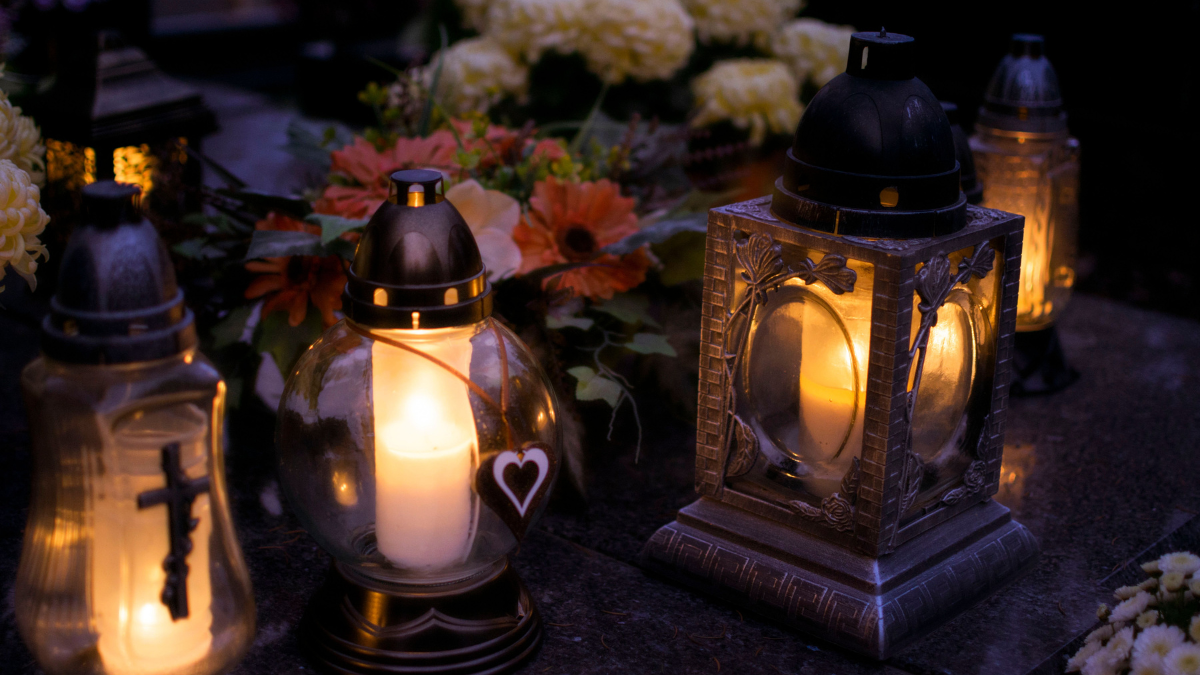
The day of December 18, 1989, is rich in revolutionary significance, although we do not record as many events as those that took place on December 16, 17, 20 or 22, 1989. Nevertheless, it was another day of resistance, determination, and preparation for the confrontations to come. The repressive forces had taken control of the city, setting up fixed checkpoints and deploying mobile patrols to prevent groups of protesters from forming. However, a tragic event would occur around midday, known as the episode in which fire was opened on the people gathered on the steps of the Metropolitan Cathedral in Timișoara. Carrying the Romanian tricolor flag with the socialist emblem cut out, several people gathered on the steps of the place of worship. Subsequent investigations revealed that the young man carrying the tricolor with the coat of arms of socialist Romania cut out was Sorin Leia.[11]. The image is significant because the demonstrators, who initially remained silent in their protest, believed they would be best protected in front of the Cathedral, placing their lives and hopes in God’s hands. Fire would be opened on them on several occasions, the members of the repressive forces being unimpressed by the religious symbol. Fire would be opened—and there would be many victims—on the people gathered at the Cathedral both on the evening of December 17 and on December 18. The Cathedral was not in danger of being vandalized; nevertheless, nothing was done to stop the break-ins at the shops across the street, just a few meters from those who opened fire.
In the newspaper Renaşterea bănăţeană In issue no. 24, dated February 1, 1990, we also find a clarification regarding the dilemma surrounding the doors of the place of worship on December 18, 1989. As is known, fire was opened in the area of the Cathedral. There were deaths and injuries. Subsequent testimonies revealed that combined forces of the Army, the Securitate, and the Militia were present here, and General Mihai Chițac was one of the commanders of the repression. The controversy arose from the fact that when fire was opened, the people protesting on the steps of the Cathedral tried to take refuge inside the place of worship, but allegedly failed to do so. Archpriest Cornel Pleșu would maintain that the church’s regular schedule had been observed, that the doors had not been closed and that, in fact, the wounded young man brought there at around 17:15 received medical care (but did not survive), while the people who had taken refuge in the holy place were carefully escorted out through a side door, so as not to endanger their lives. The fact that the doors were open and that people were actually entering and leaving is also supported by another researcher, who carefully analyzed the events.[12].
The archpriest’s account is not entirely clarifying, but it has at least the merit of providing information about what happened on December 18, 1989, at around 16:50 inside the place of worship: “At 16:50, Vespers began, but after a quarter of an hour, fire began to be opened on the young people who were on its steps, holding lit candles in their hands. Under these circumstances, the children rushed inside, causing panic. In these conditions, Father Victor Mițiga and Deacon Eugen Bendariu interrupted the religious service to see what was happening. A boy wounded in the head was brought into the cathedral and bandaged by a female doctor who was in the church, using bandages from the first-aid station. Father Victor Mițiga, seeing the desperate state the children were in—some had begun to cry—then began to lead them out of the church through the side door facing Capitol, but this proved impossible, because the moment the door was opened, fire was opened from the direction of the cinema. The children re-entered the cathedral, and Father Victor Mițiga then began evacuating them through the door on the right-hand side (facing the tram), on the condition that they leave one by one. In this way, everyone who had been inside escaped with their lives. The wounded boy from the church was accompanied by Father Victor Mițiga to the ambulance. At 18:00, the holy place was closed, and the cleaning staff cleaned the premises, washing away the blood that had flowed from the body of the shot child.”[13]. The archpriest also provides clarification regarding the activities of Metropolitan Nicolae of Banat during that period, mentioning that he was in Constantinople and then in Bucharest.[14].
The involvement of General Mihai Chițac is evident, and the incident at the Cathedral was also recorded in official documents, the contents of which were reproduced in a volume by Gino Rado.[15]. It was a bloody episode, as several people died there and others were wounded. Some aspects are clarified by the testimony of Avram Gliguță, who was wounded at that location. He would also recount the moment Sorin Leia was killed: “We pushed and shoved to get into the Cathedral. The Cathedral has a double door, but in the crush, one of the doors closed. We were crouching down, trying to squeeze our way inside. Another person and I, whom I later learned was named Sorin Leia, raised our heads to see what was happening, when a burst of gunfire was fired through us, from below upwards. Sorin Leia was hit right in the middle of the forehead. The bullet that exited his head also struck me at the base of my neck, on the right-hand side.”[16].
Official reports on the terror
Official documents summarize the incident tersely: 16:30: Groups of people gather in front of the Cathedral. Candles are lit, slogans are chanted. Fire is opened on the demonstrators (Judgment no. 2 of June 17, 1991, of the Timiș Extraordinary Military Tribunal). Marius Nemțoc is killed near the Cathedral, and very probably Ioan Măriuțac as well (the latter may also have been killed later, during the second opening of fire). Militia non-commissioned officers Constantin Țeighiu and Dumitru Asafti were brought to trial for the deaths of the young men Nemțoc and Măriuțac, but they would be acquitted.[17].
In another episode in which fire was opened, Sorin Leia would be killed on the steps of the Cathedral. As we can see, there are discrepancies regarding the timing of the moments when fire was opened. However, these differences in the timing most likely have a psychological explanation. The participants (the demonstrators, first and foremost) were under the influence of intense emotions and under extraordinary pressure, which may explain these variations, especially since no one was stopping to look at their watch very often. As Titus Suciu indicates, drawing on witness statements, Sorin Leia was allegedly killed at around 16:30.[18]. However, the witness Avram Gliguță, who was wounded at the moment Sorin Leia was killed, stated that he had previously seen pools of clotted blood in front of the Cathedral, leading to the conclusion that, before Leia was killed, there had been another distinct episode in which fire was opened, most likely the one in which Nemțoc and Măriuțac were shot.[19]. It was officially recorded: “17:15. Demonstrators appeared in front of the Cathedral carrying candles and refused to disperse. They were ordered to disperse, and fire was opened on them. They fled and barricaded themselves inside the Cathedral” (Journal of the 18th Mechanized Division, Timișoara).[20]. 17:00–17:10 is the most likely time frame in which fire was opened, although there may have been other instances that were not recorded in the military units’ combat logs.
It is noteworthy that information was transmitted rapidly from the field to the command center, the means of communication being the radio transceivers installed in armored personnel carriers (APCs) or in certain military vehicles deployed at various locations throughout the city. Communication was swift, and the information was recorded tersely in the combat logs. Later, when attempts would be made to establish the truth about the events that had taken place during those bloody days, the commanders of the military units involved (many of whom remained in their positions even after Ceaușescu’s fall) would issue reports presenting the facts in a light favorable to themselves, often in contradiction with what had happened and even with the information recorded in the combat logs. The methods used involved keeping unfavorable details silent and shifting responsibility onto the other components of the repressive forces, particularly the Securitate and the Militia. Of course, these forces also caused casualties, but a significant number of deaths and injuries were caused by the Army.
Reactions abroad
During the Revolution, particularly with regard to the events in Timișoara, it was vital that the facts become known abroad in order to obtain support and put pressure on the system. A significant number of demonstrators took it upon themselves to transmit information within the country, making determined efforts to communicate it abroad as well. These efforts were risky, as the regime had imposed a media blockade on Romanian territory. However, telephone connections could not be cut off entirely, since this would also have blocked communications within the repressive institutions. Information could also be transmitted by foreign nationals leaving the country, as they were permitted to depart, unlike Romanians, who were confined within the country’s borders.
December 21, 1989, occupies a significant place in this mechanism of information and, at the same time, disinformation, owing to the emergence of reports by the Yugoslav news agency Tanjug. These provided details about the events, but also mentioned executions carried out in Timișoara. Furthermore, Politika Ekspres devoted a page to the testimony of a person who arrived in Vršac on Wednesday morning (located 14 km from the Romanian-Yugoslav border). Accounts by witnesses who arrived by train in Vršac are also presented in other publications, all rich in detail. Nevertheless, it should be borne in mind that we are not dealing with entirely professional reporting, since human sources were able to provide information about events they had witnessed with their own eyes, but were also able, above all, to repeat details supplied by others, which takes us into the realm of rumor. In this context, it can be accepted that the presentation of the facts, although lacking the accuracy required of journalistic reporting, contributed to spreading the news around the world that the revolutionary movement had begun and that bloody repression was taking place, with deaths and injuries. Analyzing the information highlighted by the newspaper Politica on December 20, 1989, one author concludes: “Passengers arriving by train in the city of Vršac from the Yugoslav border witnessed a massacre in front of the Cathedral. They reported the killing of 36 children carrying candles in a procession, demanding bread, peace, and human dignity.”[21]. This is the first reference to the opening of fire by the repressive troops led by General Mihai Chițac against the demonstrators on the steps of the Metropolitan Cathedral in Timișoara. This episode contains unclear elements, but it is a fact that several people were killed and wounded there.
The conclusion to be drawn is that numerous controversial aspects of the 1989 Revolution in Timișoara have remained unresolved over the years, arising from inadequate communication. On the one hand, representatives of the communist regime sought at every moment to minimize media coverage, a practice that continued even after power was taken over by representatives of the National Salvation Front. The Army, in particular, manipulated the data, imposing an embargo on accurate information and seeking to build an image of itself as an essential force in overthrowing the communist regime and consolidating the new democratic regime. On the other hand, numerous exaggerations emerged because Romania lacked an efficient and professional communication system, while the accounts of those who participated in the events were shaped by emotion, the brutality of the repression leading many of them to adopt and pass on, including abroad, information that did not correspond to reality.
[1] Lucian-Vasile Szabo, Imaginea militarilor și a victimelor în Revoluția de la Timișoara, Editura Memorialul Revoluției 1989, Timișoara, 2015.
[2] Lucian-Vasile Szabo și Gino Rado, Revoluția de la Timișoara din decembrie 1989 pe înțelesul tuturor, Editura Memorialul Revoluției 1989, Timișoara 2016, p. 45.
[3] Radu Bălan, Declarație din 31 ianuarie 1990, reluată în Gino Rado (coord.), Procesul de la Timișoara: audierea în cadrul urmăririi penale a celor21+4 inculpați, Editura Memorialul Revoluției, Timișoara, 2013, pp. 27-30.
[4] Mihai Albu, Informatorul: studiu asupra colaborării cu Securitatea, Editura Polirom, Iași, 2008, p. 89.
[5] Lucian Ionică (coord.) Enciclopedia Revoluției din Timișoara 1989, volumul I, Editura Memorialul Revoluției 1989, Timișoara, 2014, p. 35.
[6] Declarație din Procesul de la Timișoara, reluată în Gino Rado, Incursiune în istoricul instituțiilor participante la reprimarea Revoluției Române din 1989, Editura Memorialul Revoluției, Timișoara, 2011, p. 48.
[7] Lucian-Vasile Szabo, Sindromul Timișoara 1989: adevăr și imaginar, Editura Memorialul Revoluției 1989, Timișoara, 2013, p. 30.
[8] Miodrag Milin (ed.), Procesul de la Timişoara (24 septembrie – 29 octombrie 1990), vol. V, Ed. Mirton, Timişoara, 2007, p. 2842.
[9] Traian Orban şi Gino Rado (ed.), Procesul de la Timişoara, vol. IX, Asociaţia Memorialul Revoluţiei 16-22 decembrie 1989, Timişoara, 2010, p. 267.
[10] Lucian-Vasile Szabo, Sindromul Timișoara 1989: adevăr și imaginar, Editura Memorialul Revoluției 1989, Timișoara, 2013, p. 138.
[11] Dumitru Tomoni, Sorin Leia, eroul martir de pe treptele catedralei, Editura Eurostampa, Timișoara, 2016, p. 96.
[12] Ibidem.
[13] Renașterea bănățeană, an I, nr. 24, 1 februarie 1990.
[14] Lucian-Vasile Szabo, Jurnaliști, eroi, teroriști, Editura Memorialul Revoluției 1989, Timișoara, 2009, pp. 78-79.
[15] Gino Rado, Incursiune în istoricul instituţiilor participante la reprimarea revoluției române din 1989. Timişoara – Decembrie 1989, Editura Memorialul Revoluţiei 1989, Timişoara, 2011, p. 194.
[16] Avram Gliguţă, Declaraţie de martor, 1990, Dosar nr. 4/P/1990 al Procuraturii Militare Timişoara, arhiva Asociaţiei Memorialul Revoluţiei 16-22 decembrie 1989, Timişoara.
[17] Lucian-Vasile Szabo și Gino Rado, Revoluția de la Timișoara din decembrie 1989 pe înțelesul tuturor, Editura Memorialul Revoluției 1989, Timișoara 2016, p. 56.
[18] Titus Suciu, Reportaj cu sufletul la gură, Editura Facla, Timişoara, 1990, p. 157.
[19] Marius Mioc, Revoluția de la Timișoara prin mărturii, Editura Partoș, Timișoara, 2019, p. 100.
[20] A fost reluat în Gino Rado, Incursiune în istoricul instituţiilor participante la reprimarea revoluției române din 1989. Timişoara – Decembrie 1989, Editura Memorialul Revoluţiei 1989, Timişoara, 2011.
[21] Cristina Iovanovici, „Orașe învelite în negru”, în Lucian-Vasile Szabo (ed.), Mass-media, represiune și libertate, Editura Gutemberg Univers, Arad, 2010, pp. 129-141.